CoRE Stack at the Participatory AI Research Symposium
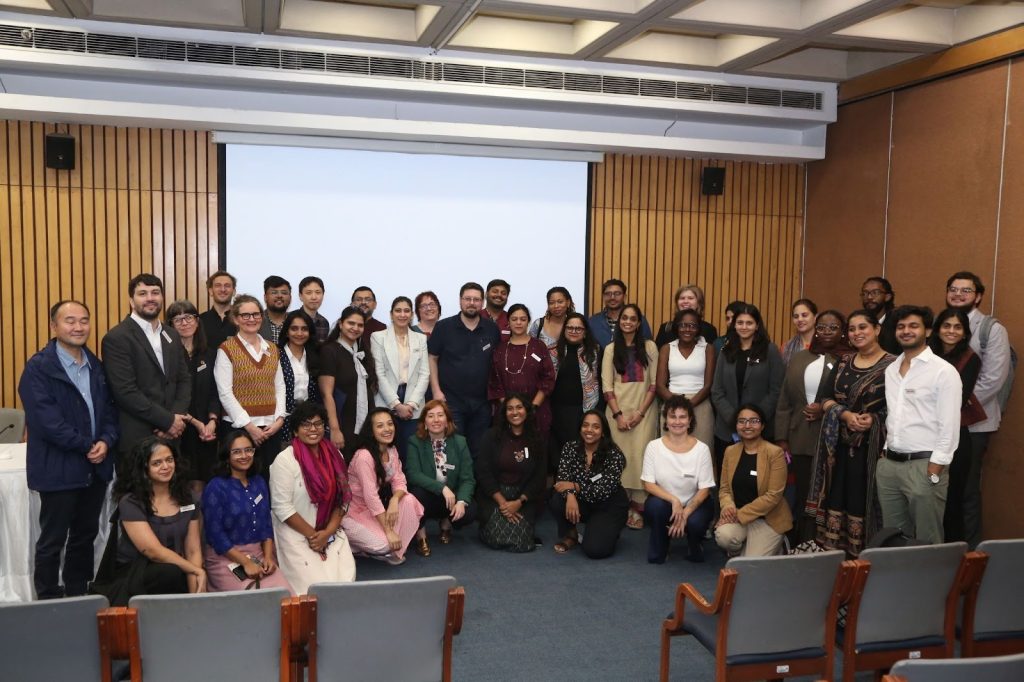
In the crazy week of February 16th this year when Delhi hosted the largest AI Impact Summit with about 500 sessions, none of which missed using the word AI in their title, a few of us convened at the Participatory AI Research Symposium to discuss the scope of centering public voices in the rapid development cycles of AI systems.
First and foremost, with over 90 presentations covering the attitudes, methods, and practices of developing participatory AI systems, it was clear that this theme moved many researchers and practitioners. We discussed how human labor in terms of data labeling and algorithmic moderation is often touted as participation and in the process, exploited. The significance of such human-in-the-loop systems was unpacked alongside the risks of a complete lack of human oversight in reviewing AI systems. Given the ubiquity of generative AI models, it was also heartening to see how researchers are investigating the role of AI in shaping cultures, traditions, and values imbibed by the next generation. Explore the full stack of presentations here!
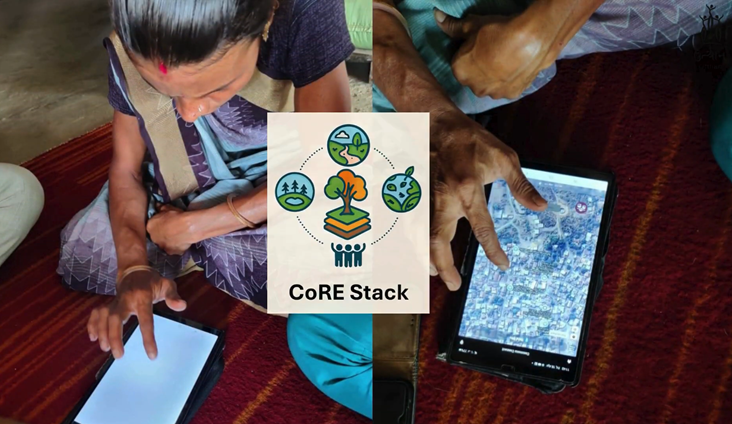
Ms. Taru Jain, our design researcher, presented CoRE Stack’s philosophy of ‘More participation, less AI’, which has been beautifully conceptualized by Ms. Anuradha Ganapathy during her field visits.
Ms. Jain unpacked our approach to Commons Connect development, which is inherently participatory across the design, deployment and adoption lifecycle, going beyond tokenistic rituals of user consultations to iterative methods of co-designing the tool. Given our intention to build communal resistance towards climate shocks, participating with affected communities is not a choice but the only practical way for us. We rarely mention the word ‘AI’ while describing the app’s purpose to the communities, allowing the AI hype to get sidelined and communal priorities to get centered.
Designed in a way that can be contested and validated by community inputs, the geospatial AI’s outputs describing land cover changes, water availability trends, and spatio-temporal cropping intensities serve merely as a participant in the civic processes of natural resource management. Our field visits confirm that our choice of restraining AI to serve as an end to end advisory system for watershed management and prioritizing communities’ agency as they contextualize algorithmic outputs with ground realities strengthens their understanding of landscapes and highlights the caste inequities in resource access. Check out the complete presentation here!
Huge shoutout to Mr. Tim Davies and Ms. Astha Kapoor for organizing this symposium. As the world polarizes into pessimistic and optimistic takes on AI, we need more such forums where the concerns around big tech systems meet the promising efforts of localized innovations across the globe!