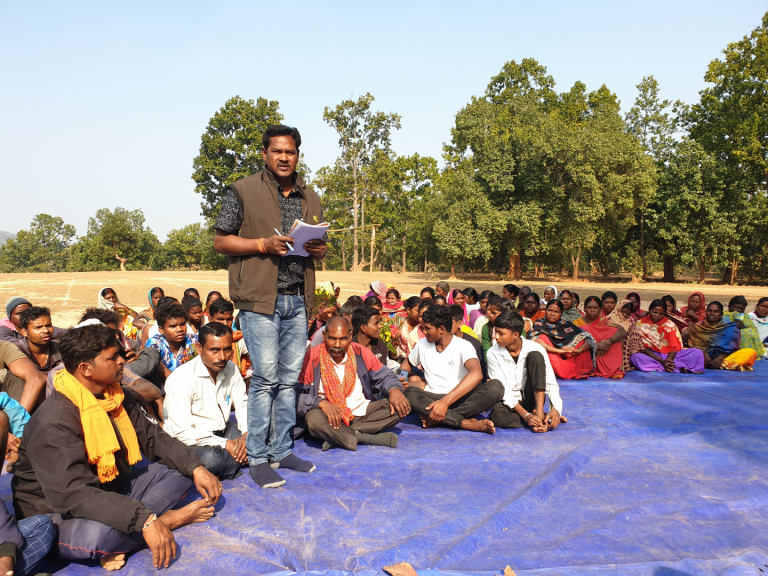
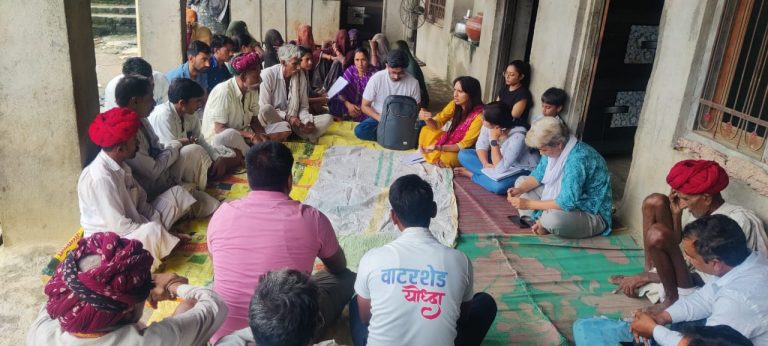
Deeply reflective blog by Anuradha Ganapathy from her field visits to observe Commons Connect deployments with partners Foundation For Ecological Security (FES), SUPPORT Jharkhand, Gram Vaani, Utthan, and others.
Read the full blog here. Excerpt:
—————–
Throughout the project, I kept looking for AI. As a technology, as a marker of significance, as a key actor. I didn’t find it. Its only now I understand why. Because I was looking for it in spaces it didn’t belong.
The people I met didn’t need an algorithm to make rules for them; they needed safeguards to ensure that the codified rules of the commons were not misappropriated for the benefit of a powerful few.
They did not need workflows to be automated. They needed data to challenge and dismantle the structures that upheld these workflows. Structures built on top-down norms of budget and target allocation. Structures enabled by caste hierarchies and power asymmetries. Structures that rendered them invisible or important.
They were not looking to be educated on how the algorithm works, what rules it was coded on, what norms guided data use. Instead, they asked if the tool could amplify their voices, legitimise their rights and entitlements, capture systematic violations and erasures, and hold local village councils to account.
—————–
Anuradha’s 4-word description summarizes the CoRE stack’s approach to tech:
More participation, Less “AI”
All credit goes to all the field partners for having discovered the right way to introduce tech and data and leverage it for what communities need rather than the other way around.