After the earlier excellent blog by Anuradha Ganapathy where she introduced the pithy statement of more participation and less AI as the mantra to follow when deploying AI tools in the field, here is a new brilliant blog and working paper on her findings from observing Commons Connect usage with partners.
Artificial Intelligence – A view from the “backroads”
Anuradha differentiates between the “AI” we hear about in the media – venture capital fueled rapid innovation with promises of world transformation, and the “AI” in practice which remains messy, guarded, and to be handled with wisdom. These are the “backroads” of AI where she studies the use of Commons Connect in her working paper.
Materialising Equity in Community-Centric AI Tools: The Case against Technocracy
Quoting the abstract of this paper by Anuradha, Richard Heeks, and Gianluca Iazzolino:
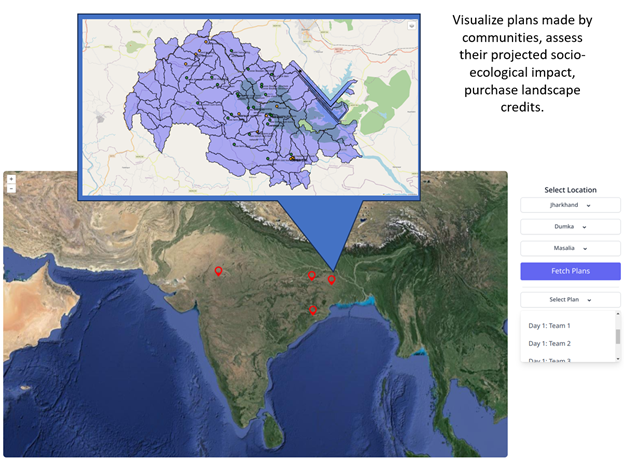
This paper responds to calls for more grounded, empirical accounts on what responsible, community-centric AI actually looks like in practice. Using the theoretical framework of advantageous digital incorporation, it examines Commons Connect, a participatory AI tool that is being used by smallholding farmers in rural India to support more equitable planning and distribution of natural resource assets at village levels. Its main message is that steering AI systems towards more equitable outcomes requires an approach that de-centres AI and its affordances, is rooted in strong problem framing, makes its focus on the wider structures of domination and oppression explicit, and demonstrates restraint in implementation.
The paper is based on observations and interviews with the early partners FES, SUPPORT, and Utthan, on their use of Commons Connect, and their wisdom and maturity in introducing AI-based tools to communities. Some of the key things the authors call out:
- Rather than begin with technical features, the data on the app is used to trigger discussions on structural inequities embedded in the MGNREGA planning and resource allocation processes.
- Rather than present the data on the app as complete, community discussions are used to generate locally situated knowledge that is layered onto the AI generated data sets for contextualization.
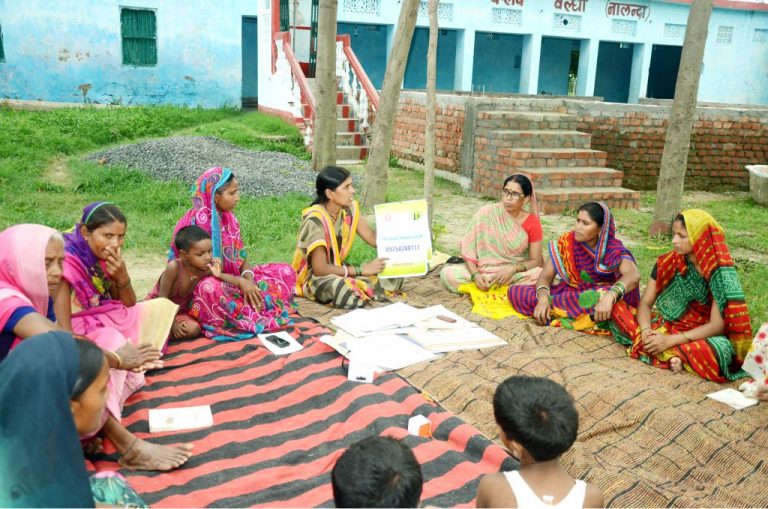
- The settlement-by-settlement consultation process baked into the design of the app, and the focus on participation around AI, helps create “invited” spaces that actively seek participation and inputs from marginalized groups, even if they may not be participating in regular participatory governance processes.
- Stewards play a critical role in interpreting the data and also create a “healthy distrust” of digital tools and their outputs – not to blindly believe in what the tools are saying but to build a culture of questioning and contesting them to come up with a final understanding.
Check out the paper and the quotations by stewards, CSOs, and the developers and maintainers of Commons Connect to understand more about the guarded and wise ways in which partners have absorbed it into their NRM planning workflows.
Errata: Commons Connect is often referred in the paper as being designed by CFPT. Anuradha is making edits in the final version of the paper to make a correction that IITD and CFPT are only the research and development leads – Commons Connect, and the entire CoRE stack, is a collective co-creation effort by so many partners – environmental research organizations, implementation partners, and academic partners, and this is what gives it an edge of being able to discover the right problems to solve and in the right way.